Historic · Foodie
Downtown / Packing District
Anaheim's civic core combines preserved citrus-era buildings, a busy food hall, public art, small shops, and some of the city's most walkable blocks.
- ZIP code
- 92805
- Best for
- Food halls, local events, architecture, and an easy evening walk
- Getting around
- Park once near Center Street or the Packing District and explore on foot
The center of local Anaheim
Downtown Anaheim occupies the city's original civic and commercial center, a few miles north of the Resort but noticeably more local in pace. Center Street Promenade, Anaheim Boulevard, Broadway, and the Packing District form its most walkable core. The area mixes city offices, cultural institutions, restored commercial buildings, apartments, restaurants, and community events. It is where Anaheim's agricultural past is easiest to read in the architecture, especially around the former rail and packing-house properties south of Center Street.
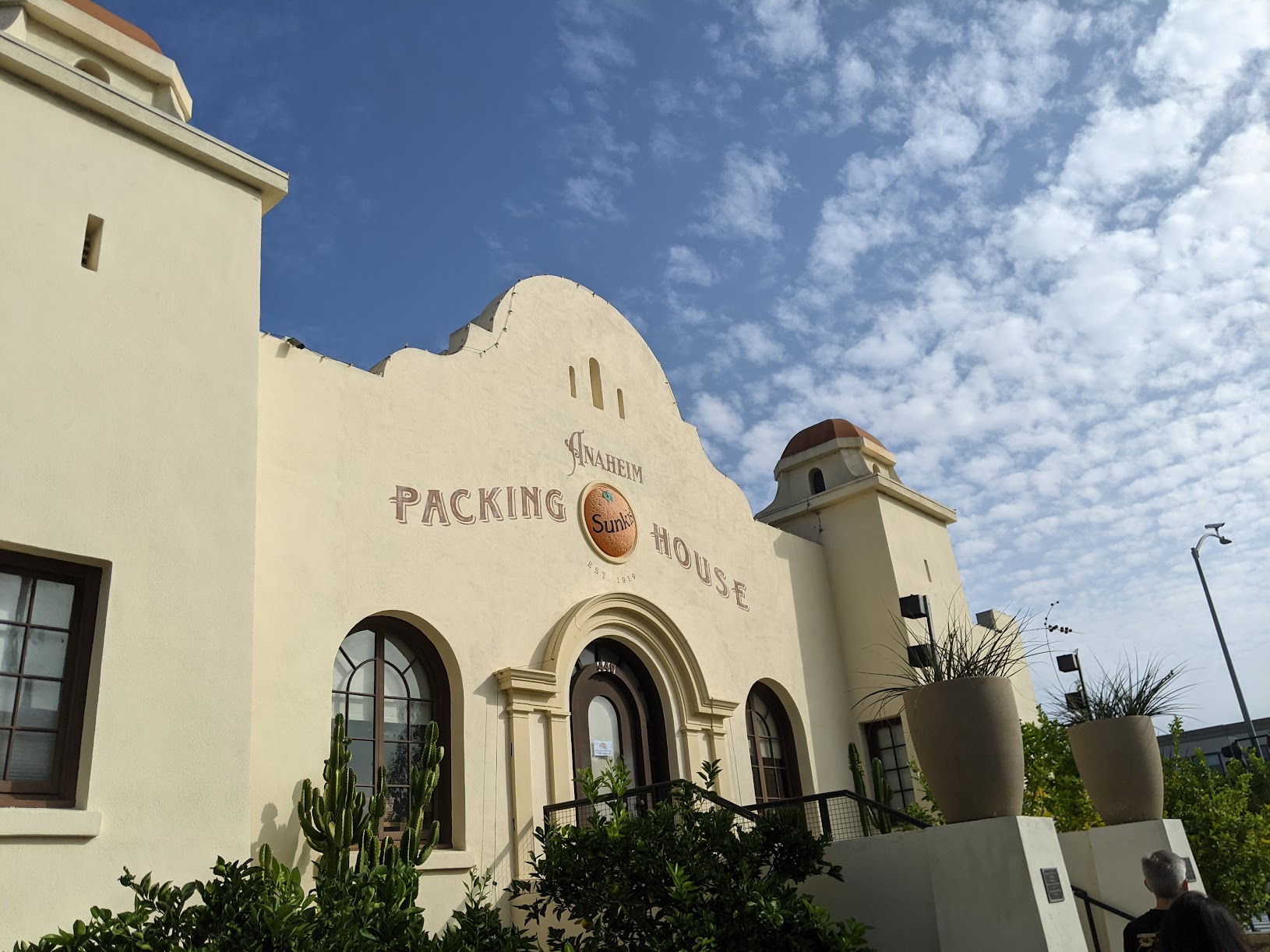
The centerpiece is the Anaheim Packing House, a 1919 citrus facility restored as a two-level food hall. Its tall windows, timber and steel structure, loading-bay scale, and open interior preserve the feeling of an industrial building even when every table is occupied. Farmers Park and nearby converted buildings expand the district beyond a single destination. Together they turned a quiet edge of downtown into one of Orange County's best-known gathering places while keeping a physical connection to the industry that once defined Anaheim.
History in the street grid
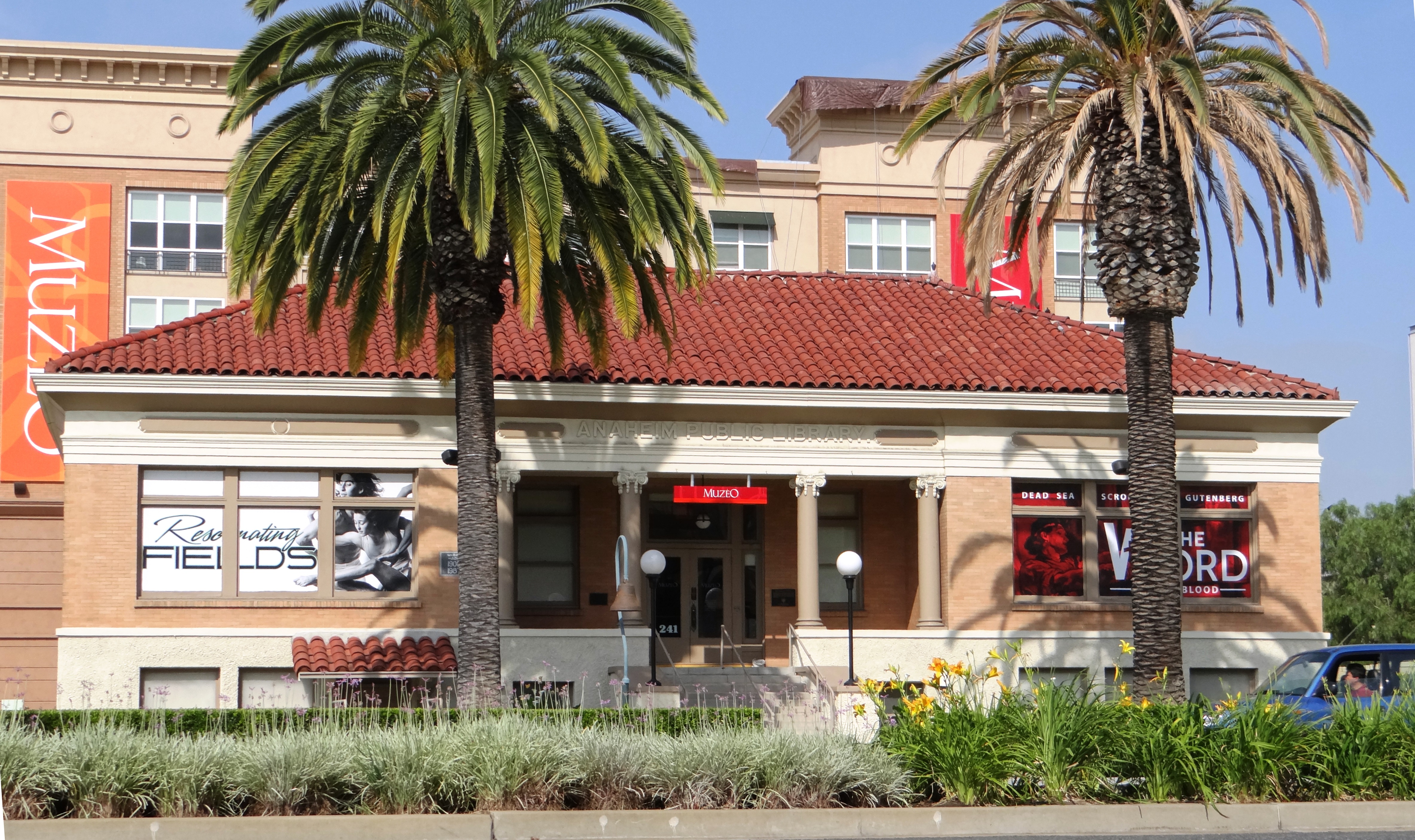
Anaheim began in 1857 as a planned German vineyard colony, and downtown still follows the broad grid laid out for that settlement. Much of the nineteenth-century business district disappeared during redevelopment and freeway construction, but important survivors remain. The Carnegie Library, now part of Muzeo, dates to the early twentieth century. The Kraemer Building marks a later period of downtown ambition, while the Packard Building and packing structures recall the transition from agriculture to automobiles and modern commerce.
Center Street Promenade is the most comfortable starting point for a walk. Its small storefronts, public art, shade, and event programming create a town-center atmosphere without pretending the district is frozen in the past. From there, the Muzeo campus, Pearson Park, Packing House, and Colony residential streets can be combined into a longer loop. Distances are manageable, but Anaheim Boulevard is a busy working street, so use marked crossings and expect traffic around civic events.
Food, events, and practical details
Food is the modern district's strongest draw. The Packing House offers many choices under one roof, but the better experience is to explore beyond it: coffee, breweries, bakeries, and independent restaurants are spread through nearby blocks. Thursday market activity and seasonal events add energy to Center Street, while Farmers Park offers open space between meals. Crowds peak on Friday and Saturday evenings; arriving earlier makes parking and seating much easier.
Downtown works well as a half-day stop or a relaxed evening away from the theme parks. It is less polished than the Resort and more representative of the city residents use every week. Pair the Packing House with the Carnegie Library and a walk north into the Colony to understand how Anaheim moved from vineyard settlement to citrus town to modern city. Check individual venue schedules before visiting because museum hours, markets, and live programming vary, while the public streets and historic exteriors can be enjoyed at any time. Weekday mornings offer the quietest look at the architecture, while weekend evenings reveal the district at its most social.