Historic · Craftsman
The Colony
The original Anaheim colony grid survives as a residential historic district filled with mature trees, architectural variety, and the city's oldest landmarks.
- ZIP code
- 92805
- Best for
- Architecture walks, local history, mature streetscapes, and slow exploration
- Getting around
- Walk selected blocks, respect residences, and combine with Founders' Park
Anaheim's original footprint
The Colony occupies the broad area of Anaheim's original 1857 settlement, traditionally framed by North, South, East, and West streets. German-American investors organized the Los Angeles Vineyard Society, purchased land from the Rancho San Juan Cajón de Santa Ana, and hired George Hansen to survey a town and vineyard colony. Hansen's generous grid and irrigation plan came before most settlers arrived. Although the vines disappeared after disease struck in the 1880s, the original layout remains legible in today's blocks.
This is Anaheim's largest concentration of historic residential architecture. Victorian cottages, Queen Anne houses, Craftsman bungalows, Spanish Colonial Revival homes, and modest early twentieth-century residences sit close together beneath mature trees. The district is visually varied because it grew over decades rather than through one subdivision plan. A large, ornate house may stand beside a small bungalow, with later apartments or infill nearby. That mix tells a more accurate story than a perfectly preserved museum street would.
Landmarks and a walking route
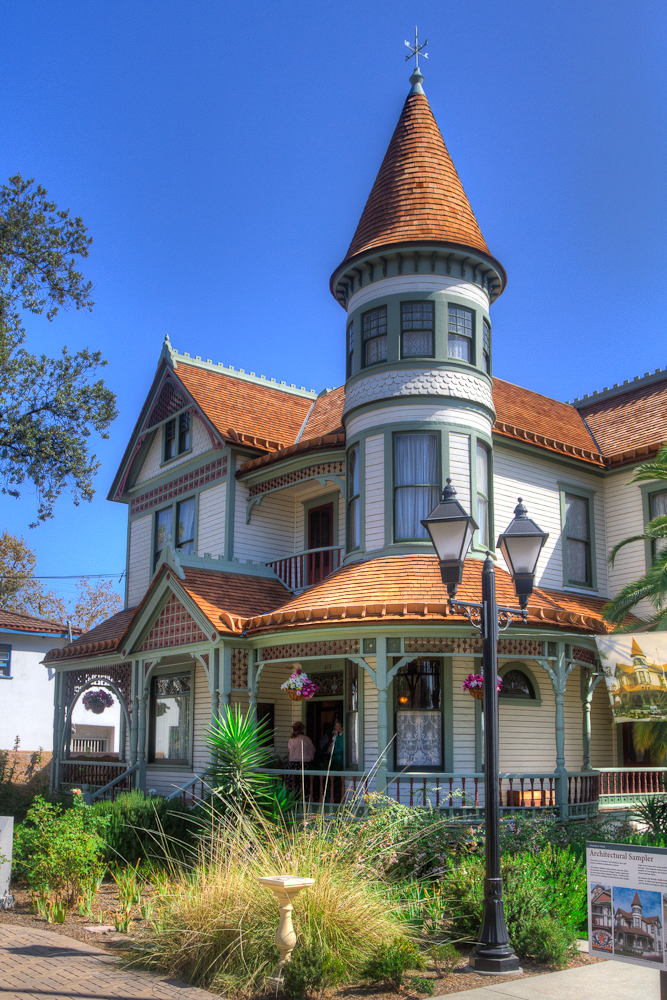
Founders' Park is the essential starting point. The Mother Colony House, built in 1857 for surveyor George Hansen, is recognized as Orange County's oldest surviving house. Nearby, the 1894 Woelke–Stoffel House shows the ambition of Anaheim's later citrus era with Queen Anne details and a prominent tower. Public access to interiors follows limited schedules, but the park grounds and exterior views provide a clear introduction to the city's earliest built history.
From Founders' Park, choose a short loop through surrounding residential blocks rather than trying to cover the entire district. Look for deep setbacks, broad lots, porch orientation, mature street trees, and plaques identifying historic properties. Continue south toward Pearson Park, Muzeo, or Center Street if you want to connect the neighborhood to downtown. Sidewalk conditions vary, and busy streets cut through the district, so plan crossings deliberately and avoid treating private lawns or porches as public exhibits.
Preservation and present-day life
The Colony survived despite decades when older Anaheim buildings were demolished for redevelopment, road projects, or replacement construction. Local preservation advocacy helped establish historic protections and encouraged owners to retain architectural features. Preservation does not mean nothing changes: houses are adapted, restored, expanded, and lived in. The district's value comes from continuity—the relationship between buildings, streets, trees, and the original colony map—not from any single frozen year.
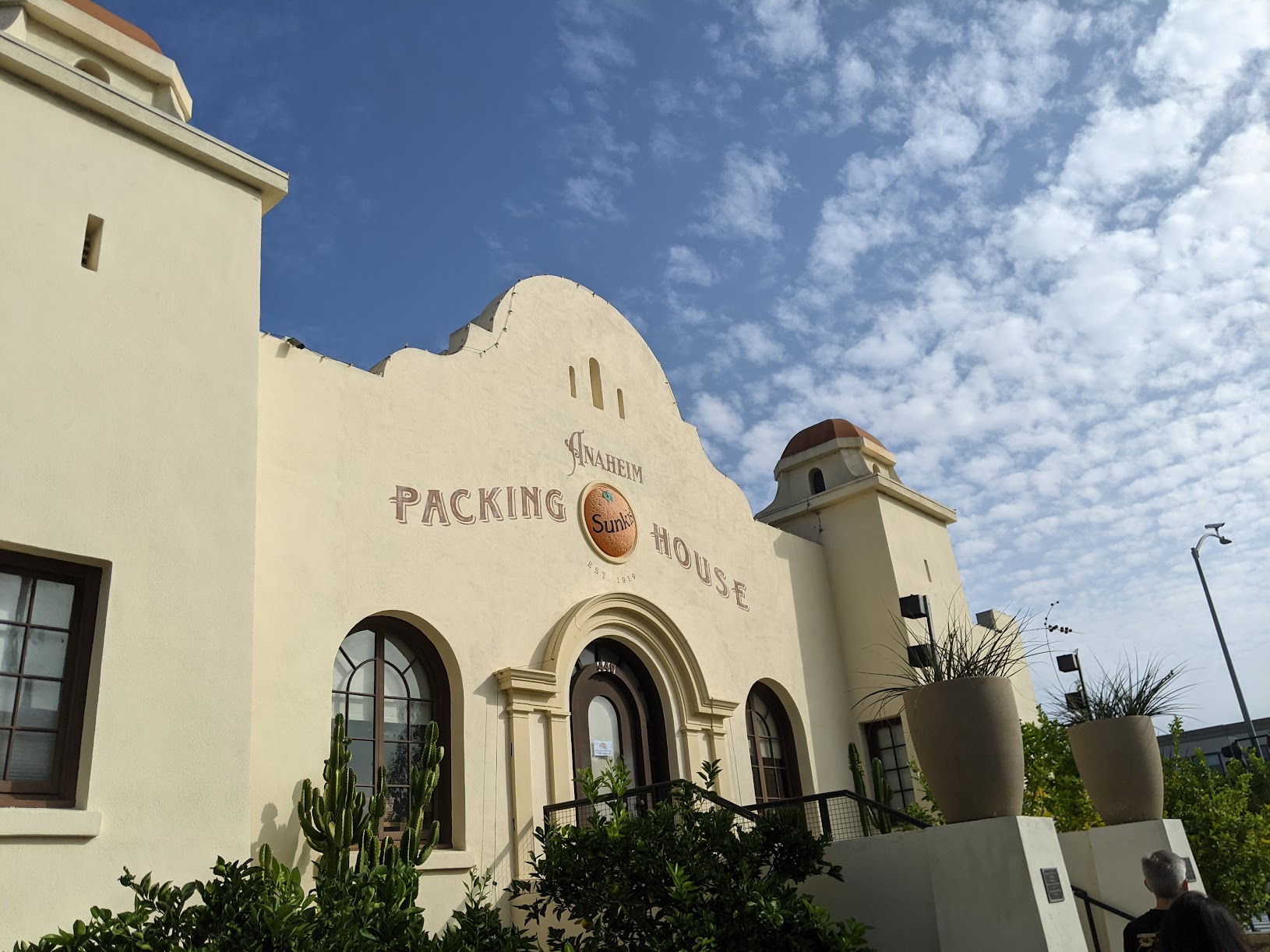
Visitors should remember that this is primarily a residential neighborhood. Walk in daylight, keep voices low, photograph from public sidewalks, and never enter private property without permission. For the fullest picture, pair the Colony with the nearby Packing District and Anaheim history page. Together they show how a planned vineyard settlement became a citrus center, lost much of its old downtown, and still retained enough homes and civic landmarks to make its origins visible on the ground. Morning light and quieter traffic also make the architectural details easier to appreciate.